Feature
It suggests; a person decides
You get a suggested chart to file against and the people to notify, written in plain English, and you confirm before anything moves. You get the right document to the right place fast, and you stay in the loop.
What it does today
Rules in plain English
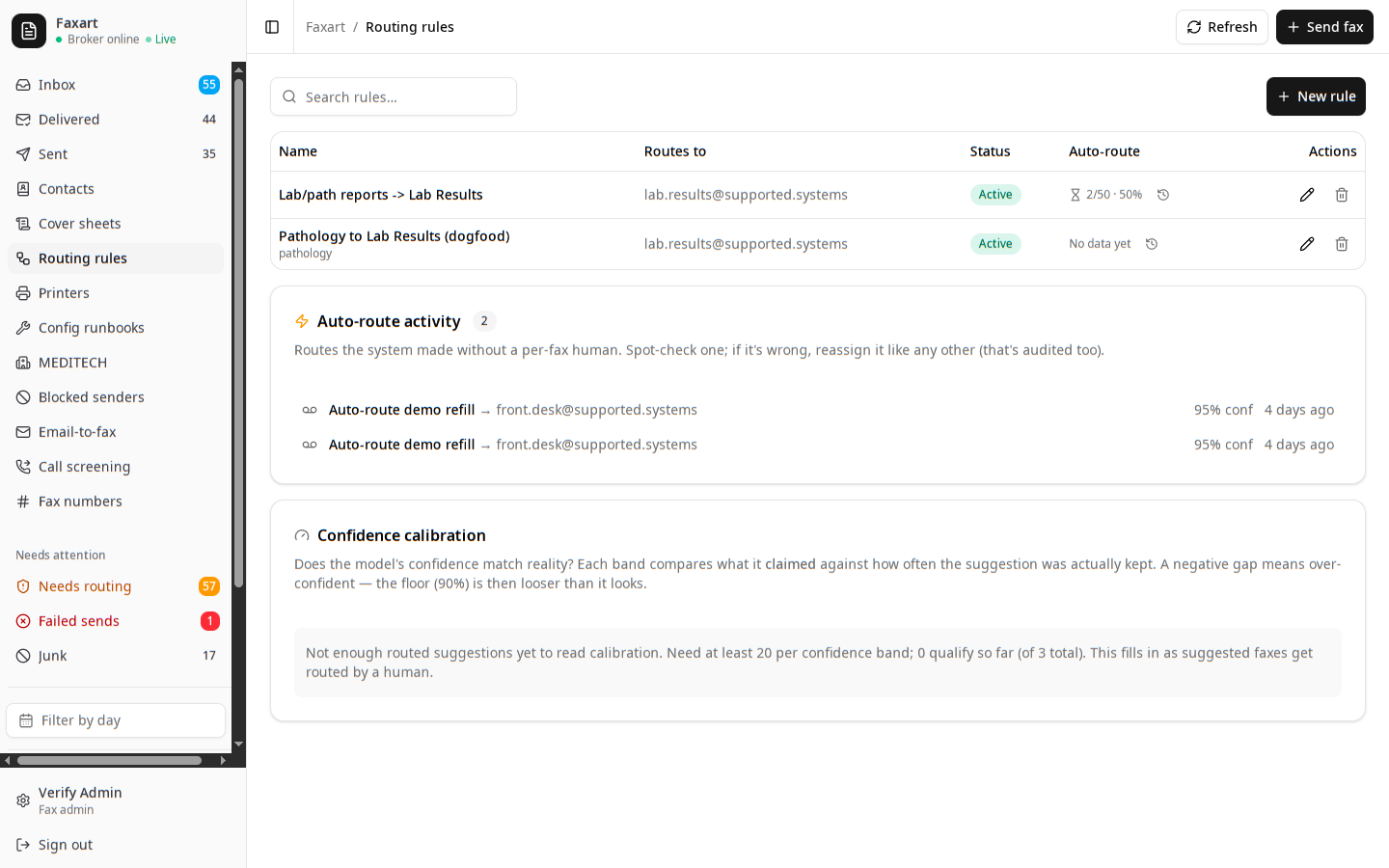
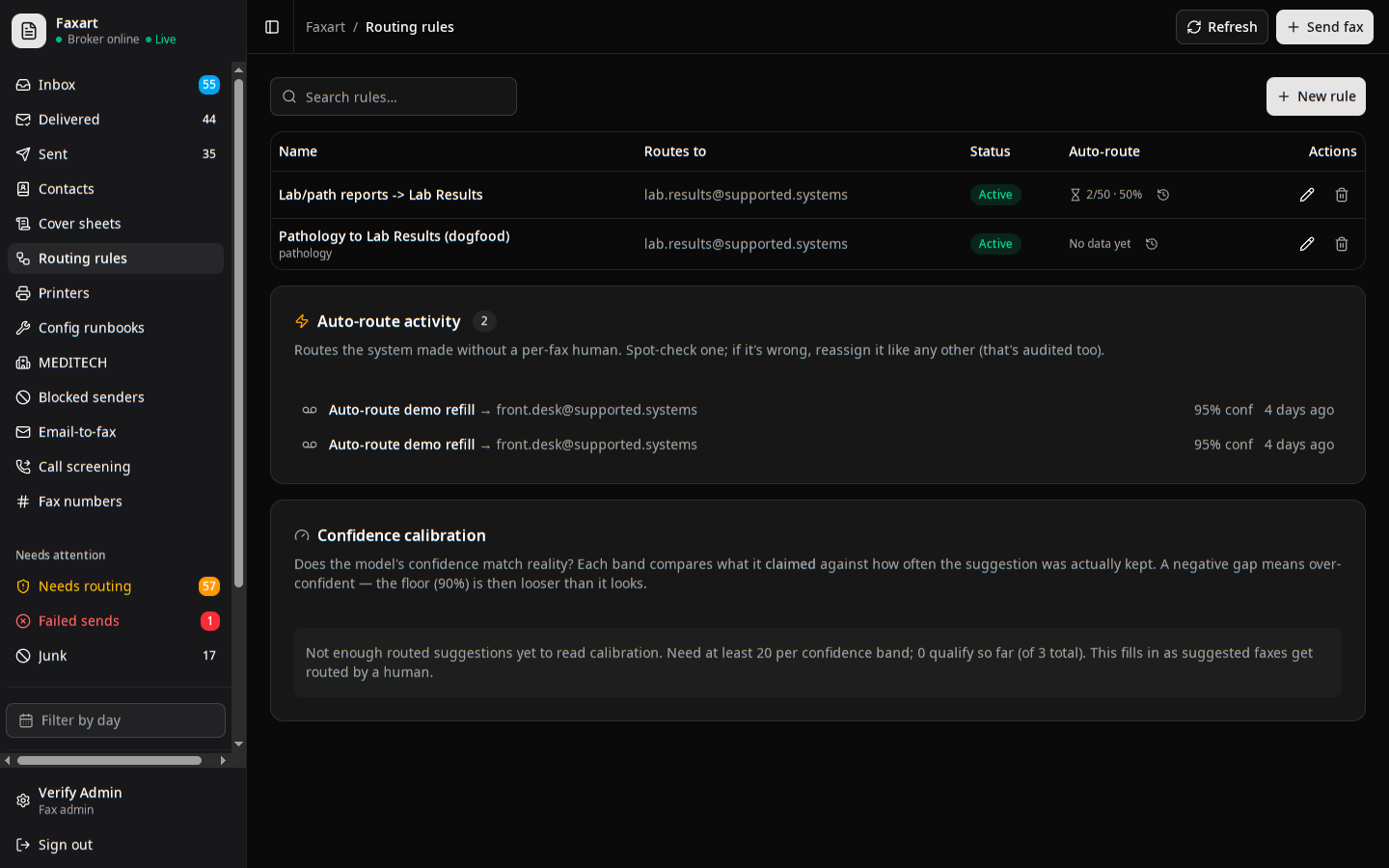
You describe the match in a sentence (“pathology reports from this lab go to the oncology pod”), test it against recent items to see what it would have caught, then save. No condition trees, no scripting.
Write a routing ruleA review queue
Every suggestion waits for you. You see the page, the extracted fields, and the proposed destination side by side, then approve or override. Nothing files itself.
Work the review queueEarned autonomy
A rule routes on its own only after it has agreed with people often enough to earn it. The trust is computed live from real decisions, never flipped on by a switch.
Enable auto-mode safelyBrakes that hold
A confidence floor stops a shaky call, and drift auto-disengages a rule that starts disagreeing again. A machine routing decision never feeds its own trust score, so autonomy can’t bootstrap itself.
The auto-mode trust gateRelated
Auto-mode, earned
How a rule earns the right to route on its own, the trust math behind it, and the brakes that hold.
Reading every page
How each page is read and classified on your own hardware before a rule ever sees it.
Filing to the chart
The confirmed handoff into MEDITECH, still a person’s call, every time.
See it on your own stack
Book a demo, or read how you write and test a rule.