Feature
Findable later, accountable always, every read on the record
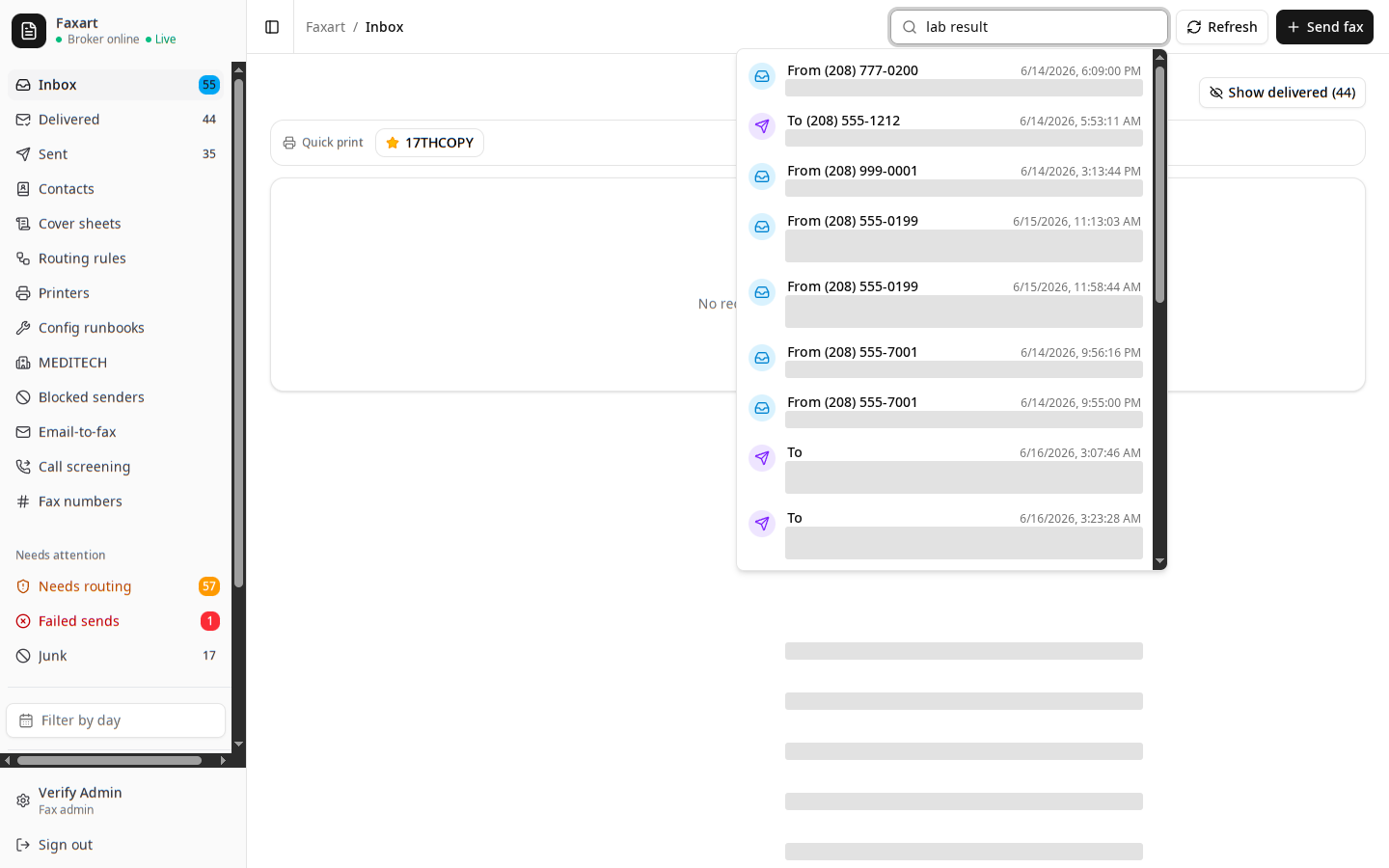
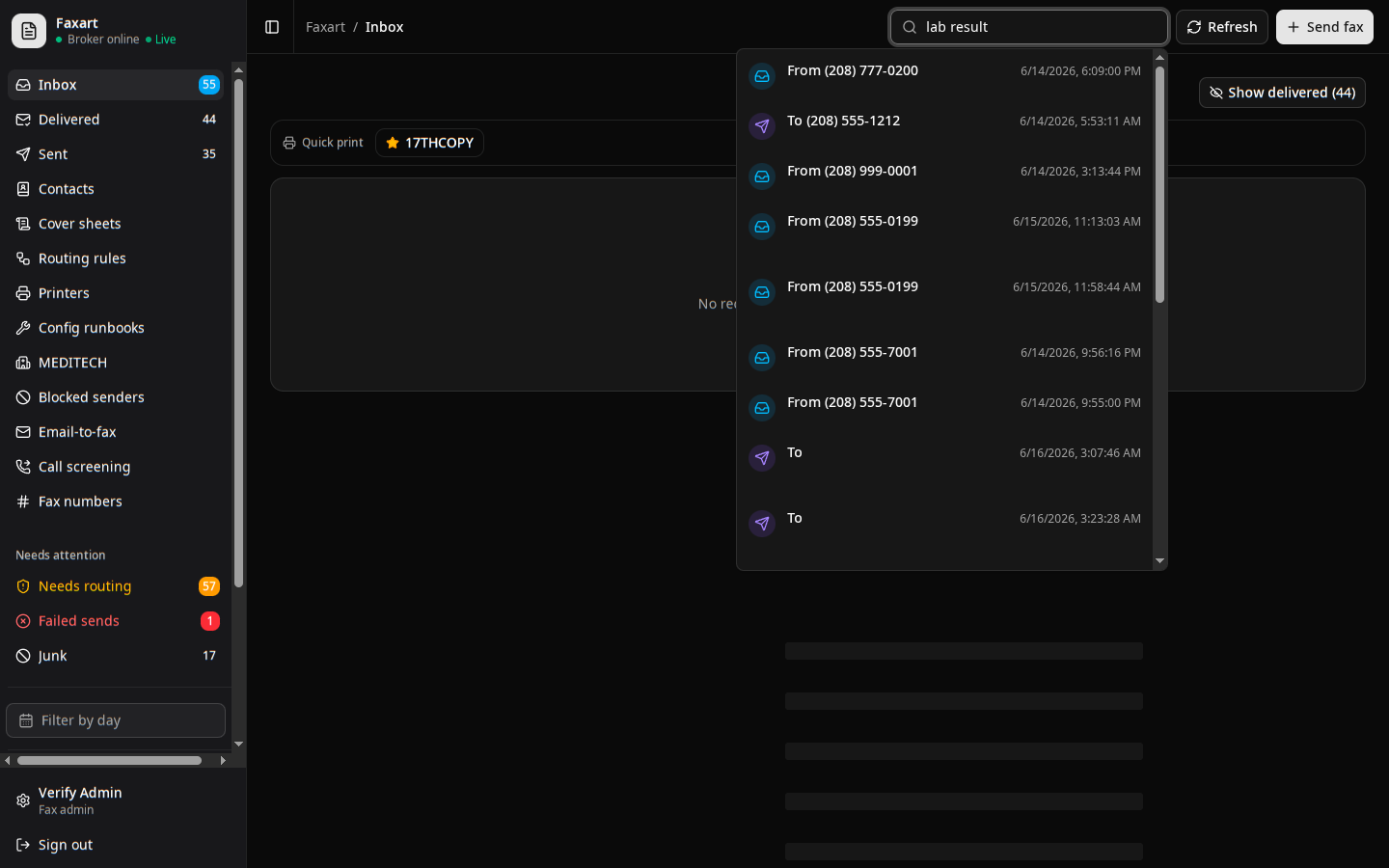
Years of fax and voicemail history don’t disappear into a dead server. You can find anything in them, by a phrase on the page and by what a document was actually about. And every time you read a patient’s record, that read is on the record too.
What it does today
Search by keyword and meaning
Type what you remember and find it: last week’s lab result by a phrase on the page, or a years-old referral by what it was about even when the words don’t match exactly. You keep the whole history one query away.
Why PHI stays on-premEvery read on the record
Every time you open a chart-bound document, that read is logged at a database-level floor, not just as a click in the web UI. Who opened what, and when, is recorded beneath the app where it can’t be quietly stepped around.
How reads are loggedKeeps running
You keep sending and receiving even when a box goes down: active-active media runs two FreeSWITCH instances behind a proxy, so a failure loses at most the call in flight while the next fax routes to the survivor.
How high availability worksNothing silently dropped
You see held, quarantined, and failed as first-class states you can act on. A fax that can’t be delivered is surfaced for you to requeue, never a quiet loss no one finds until a patient asks.
No fax left behindRelated
How a document gets read in the first place, and how it lands on the right chart.
Security and audit
The database-level PHI-read floor, blocked senders, and the no-fax-left-behind guarantee, in one place.
Reading every page
On-prem OCR and classification turn each inbound page into text you can search and route.
Filing to the chart
A suggested chart and a human confirm before anything reaches MEDITECH.